
Symposium Rules
As writing gets cheaper, presence becomes more valuable.

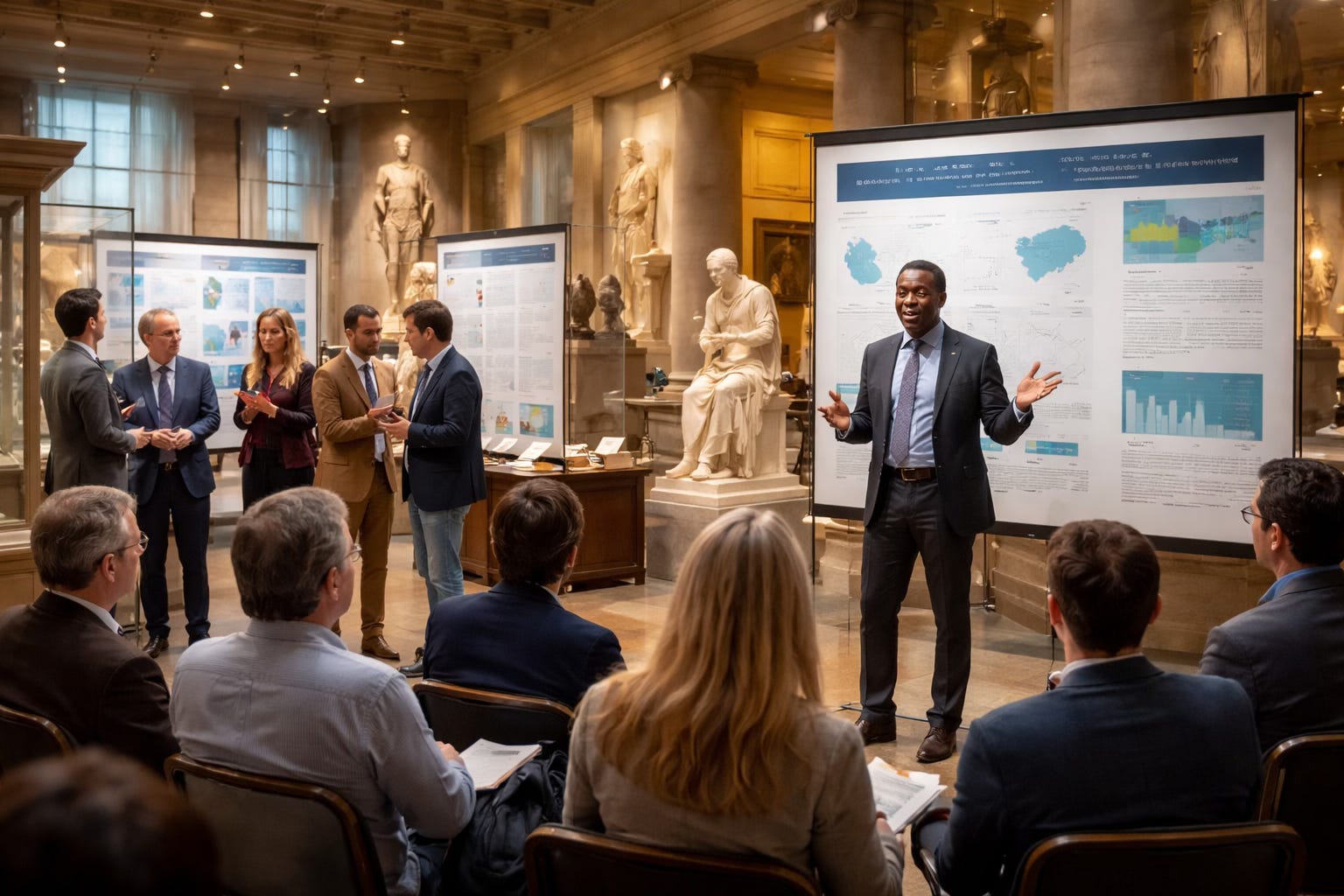
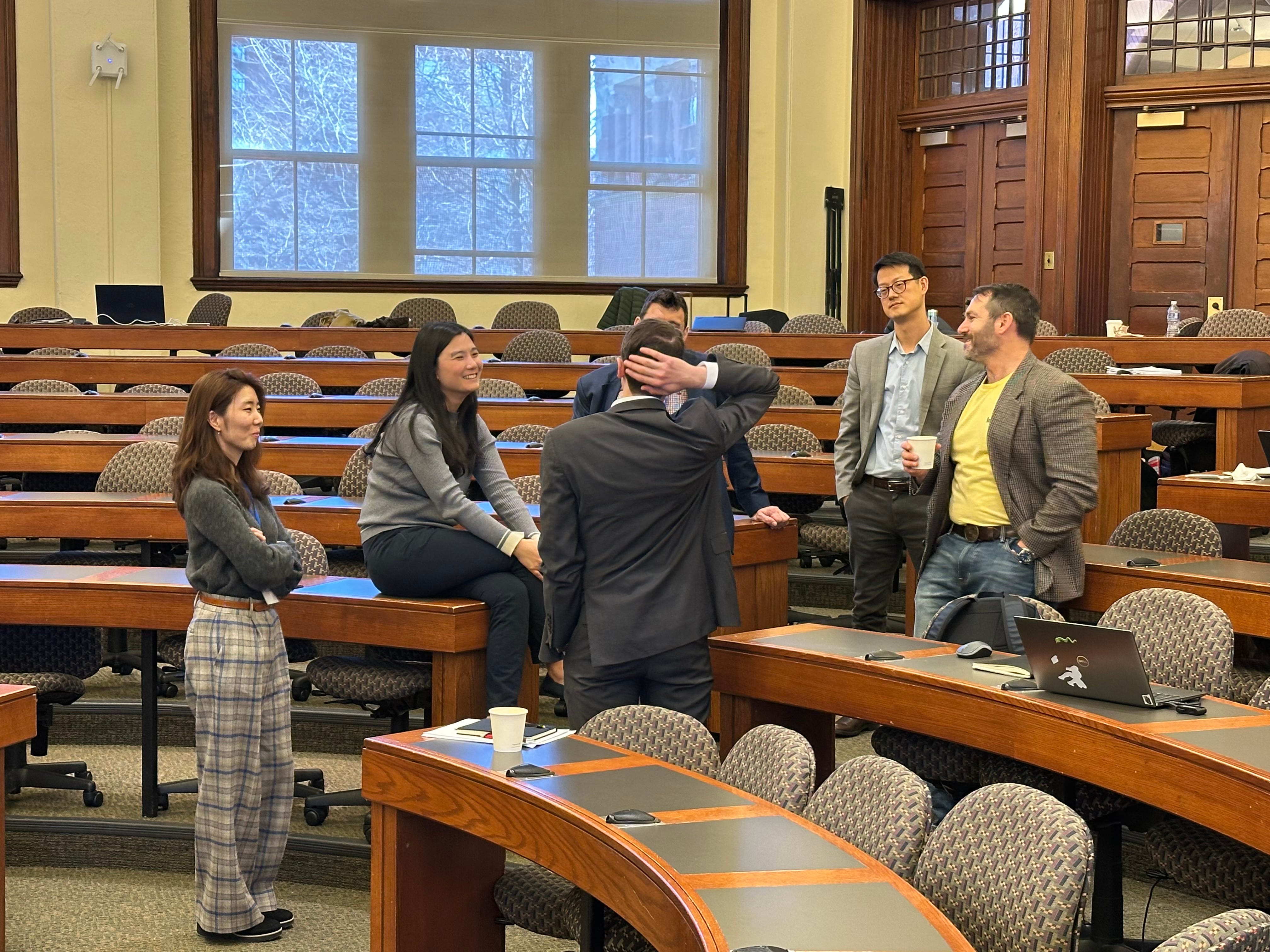
Last week, I helped organize a symposium at Harvard Law School with my partner and colleague, Diane Lourdes Dick. Sponsored by the Harvard Journal of Law and Technology and Iowa Law’s Innovation, Business and Law Center, the event brought together twenty experts to address one of the most pressing questions in law and technology: what happens when AI systems stop assisting human decisionmakers and start acting on their own? The papers were excellent, the timing felt right given how much agentic AI now dominates the national conversation, and I’m proud of the program we put together. But what stayed with me most was not the content of the papers or the broader topic. It was the format of the event itself. The more I think about where academic life is heading in the era of AI, the more I suspect the live, in-person symposium is going to assume even greater importance.
One reason is straightforward. As Professor Frank Fagan observes in the Illinois Law Review Online, legal academia appears to be approaching a publication bottleneck. His basic claim is simple: law reviews are currently somewhere near equilibrium, with roughly 5,000 annual submissions competing for about 5,600 placements, but large language models could push the number of submissions much higher—toward 8,000—without any comparable increase in publication capacity. He predicts that journals will respond not with wholesale reform, but with additional reliance on author prestige as a sorting factor and the increased use of symposia as publication pipelines.
Whether or not the numbers reach the level Fagan predicts, the directional trend seems clear. We are entering an era in which article-length scholarship becomes much easier to produce but much harder to evaluate and place. That shift will mean that the scarce good in academia will no longer be the ability to generate polished prose. The scarce goods will be other things: the expert curation of topics and ideas, intellectual exchange and collaboration, and the real-time testing of arguments against other informed minds.
Those are the goods that a live symposium provides.
The written article is still important, of course, and it remains the legacy artifact that will be cited, taught, and archived. But in an AI-saturated environment, the article alone will tell us less than it used to. Smooth and clear writing will be cheaper, structural coherence will be easier to simulate, and citations, charts, and graphs will be easier to generate. A paper that looks polished on the page may not reflect deep thought so much as competent assembly.
A live symposium exposes the difference. It reintroduces friction into scholarly evaluation. In person, an argument must survive—and will likely benefit from—active engagement with other minds. You can hear when someone is genuinely working through an idea versus performing fluency. That kind of signal is difficult to fake and impossible to generate from a prompt.
One analogy that came to mind while attending our program at Harvard is the museum exhibition. Museum scholars have long argued that visitors should not be seen as passive recipients of institutional content, and I believe that this is a helpful way to think about symposia, too. A symposium is not just a delivery mechanism for papers any more than an exhibition is just a storage mechanism for objects. In both cases, curation is the key, and the value lies not only in the individual artifacts on display, but in the encounters—formal and informal—between those artifacts and the people who come to observe and engage with them.
And here is one area where AI may actually strengthen the modern symposium rather than weaken it. A big reason why symposia can feel intimidating is that the entry costs are high. A non-expert may not have time to read twelve dense papers in advance, and even scholars in adjacent fields may worry that they lack the technical background to follow every panel closely. But if attendees can use AI tools to generate reliable summaries and clarify unfamiliar concepts before the event, they can arrive better prepared to focus on what the live symposium does best: the conversations that happen on panels, in hallways, and over dinner. An economist, a sociologist, or a practicing lawyer may not read every paper in full before attending an AI-and-the-law symposium, but with good preparation materials, that person can still participate meaningfully in the discussion—and the discussion is richer for it.
This accessibility point matters, because it suggests that AI may lower the barriers to joining scholarly dialogue even as it raises the volume of written output. The same technology that makes article production cheaper may also make curated live engagement more inclusive. Here again the museum analogy is useful, though imperfect. The best exhibitions give visitors enough structure and context to orient themselves before they encounter the specific content on display. A symposium can aspire to something similar, and AI can help lower the pre-event burden of comprehension so that more value can be extracted from the live event itself.
I should note the obvious counterargument: if AI can help attendees prepare more efficiently, it could also help them perform more efficiently. Someone could show up with AI-generated talking points and rehearsed questions, simulating depth without possessing it. That is a real risk, and I don’t think it disappears. But I do think it is harder to sustain a performance over a full day or two of unscripted exchange than it is to polish a written draft at your desk. The symposium’s advantage is precisely its unpredictability.
Fagan is surely right that oversupply may harden prestige-based sorting in many corners of the legal academy, and he is also right that symposia may become a more important institutional response. But I would push the point one step further. The symposium is not merely a useful administrative adaptation to publication scarcity. It is now one of the most important forms of academic validation available in an era when writing alone is no longer a reliable signal.
Thank you for sharing and giving your energy to this timely and difficult issue.